
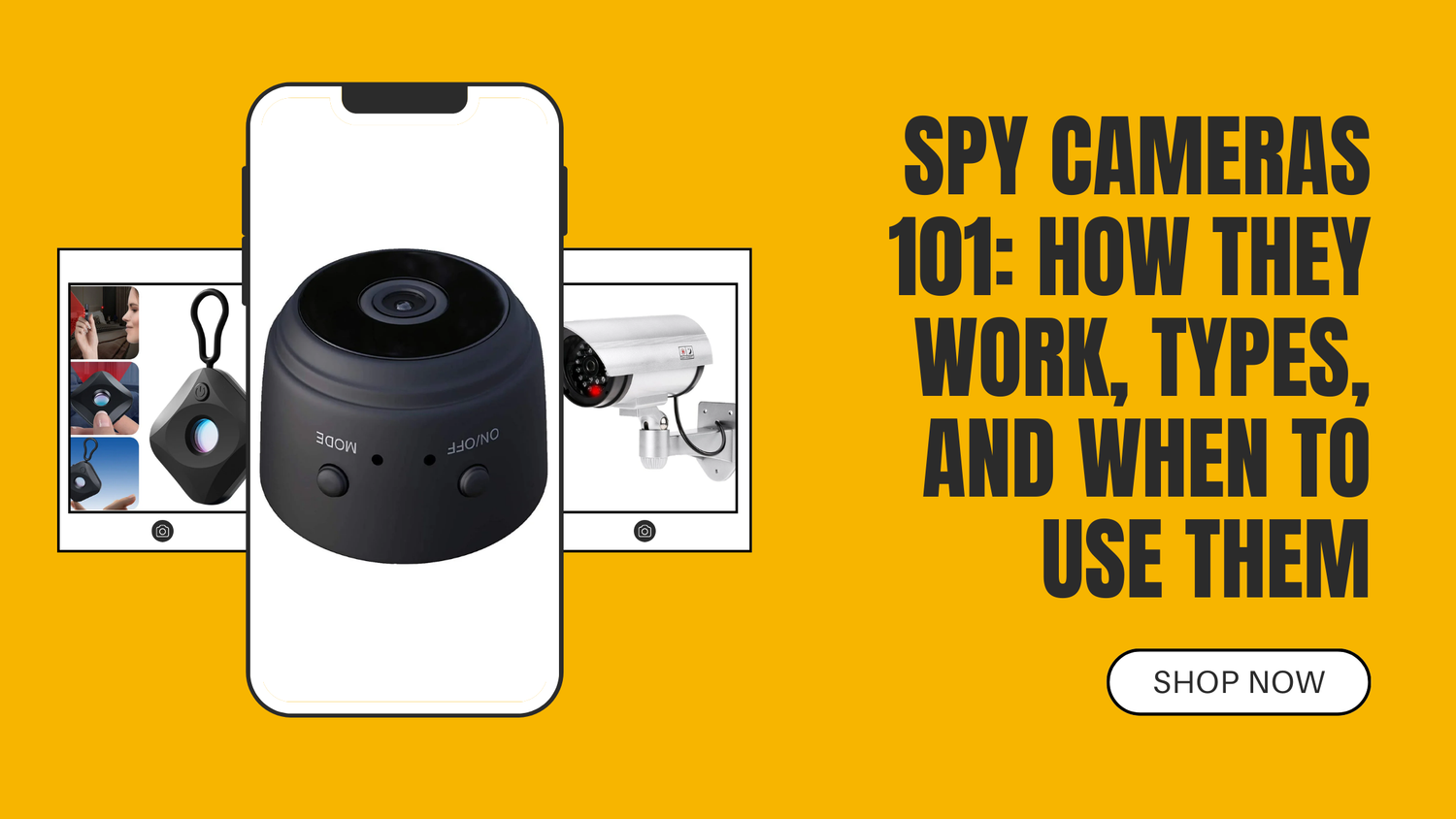
Spy cameras have quietly become part of the modern smart gadgets ecosystem. Once associated only with investigative work, they are now widely used for home security, office monitoring, travel safety, and even elderly or pet care.
But many users buy them without fully understanding how they work or which type suits their needs. This guide breaks it all down in a simple way—how spy cameras work, the different types available, and when it actually makes sense to use one.
1. What is a spy camera?
A spy camera is a small, discreet camera designed to record video without drawing attention. Unlike regular CCTV cameras, spy cameras are often hidden inside everyday objects or designed to be extremely compact.
They can:
- Record video (with or without audio)
- Capture movement
- Store footage locally or send it to your phone
- Work silently in the background
The goal is not spying on people, but monitoring situations where visibility matters.
2. How do spy cameras work?
At their core, spy cameras work like any digital camera—just in a much smaller form. Basic working process:
- A tiny lens captures video.
- The footage is processed by an internal chipset.
- Data is stored on a microSD card or cloud storage.
- Power is supplied via a built-in battery or external source
WiFi spy camera functionality:
A WiFi spy camera connects to your home or office network and allows:
- Live viewing through a mobile app.
- Instant motion alerts.
- Remote access from anywhere.
Without WiFi, spy cameras still record locally—but you’ll need to retrieve footage manually.
3. Common types of spy cameras
Choosing the right type depends on where and why you want to use it. Here are the most popular ones:
3.1. Mini spy cameras
Small, lightweight cameras with basic recording features.
Best for: Temporary monitoring, travel, quick setups.
Limitations: Short battery life, limited range.
3.2. WiFi spy cameras
Connected to the internet for real-time monitoring.
Best for: Home security, office monitoring, remote viewing.
Pros: Live feed, alerts, cloud storage options.
Cons: Dependent on WiFi stability.
3.3. Object-based spy cameras
Hidden inside everyday items like clocks, chargers, pens, or smoke detectors.
Best for: Discreet indoor surveillance.
Note: Must be used responsibly and legally.
3.4. Battery-powered spy cameras
Completely wireless models with rechargeable batteries.
Best for: Areas without power outlets.
Trade-off: Requires frequent recharging.
3.5. Plug-in spy cameras
Draw power directly from a wall socket or USB source.
Best for: Continuous recording
Advantage: No battery anxiety
4. When should you use a spy camera?
Spy cameras are useful when used ethically and legally. Here are common real-life use cases:
4.1. Home security
- Monitor entry points
- Check on house helpers
- Keep an eye when you’re away
4.2. Office & shop monitoring
- Prevent theft
- Monitor workspaces
- Ensure safety after hours
4.3. Child & elder care
- Check on caregivers
- Monitor elderly parents remotely
- Peace of mind during work hours
4.4. Travel safety
- Hotel room monitoring
- Temporary room surveillance
- Keep valuables safe
4.5. Vehicle security
- Monitor car interiors
- Track suspicious activity
5. When are spy cameras not the right choice?
Despite their appeal, spy cameras aren’t ideal for every situation.
Avoid using them when:
- Legal consent is required but unavailable.
- Long-term outdoor monitoring is needed.
- High-resolution night surveillance is critical.
- You need professional-grade evidence recording.
In such cases, CCTV or smart security cameras are a better fit.
6. Legal & privacy considerations
Using spy cameras responsibly is essential.
General best practices:
- Use only on your own property.
- Avoid private spaces like bathrooms or bedrooms.
- Inform occupants where legally required.
- Follow local surveillance and privacy laws.
Spy cameras are tools—not loopholes.
Final thoughts
Spy cameras have evolved into practical smart gadgets that serve everyday needs when used correctly. Whether it’s a basic mini camera or a feature-rich WiFi spy camera, the right choice depends on where, why, and how long you plan to use it.
The key is understanding their limitations, respecting privacy, and choosing models that fit your real-world needs—not just flashy specs.
Spy cameras are not about spying—they’re about awareness, safety, and peace of mind.


